
ten years of impact
Creating opportunities to save food and feed peopleLifetime metrics
70,000
rescues completed

16 million
lbs. of food rescued

950
volunteers engaged
330
partners served

500
food donors activated
DC Food Rescue · Every Neighbor United for Food
Supporting our partners and their missions
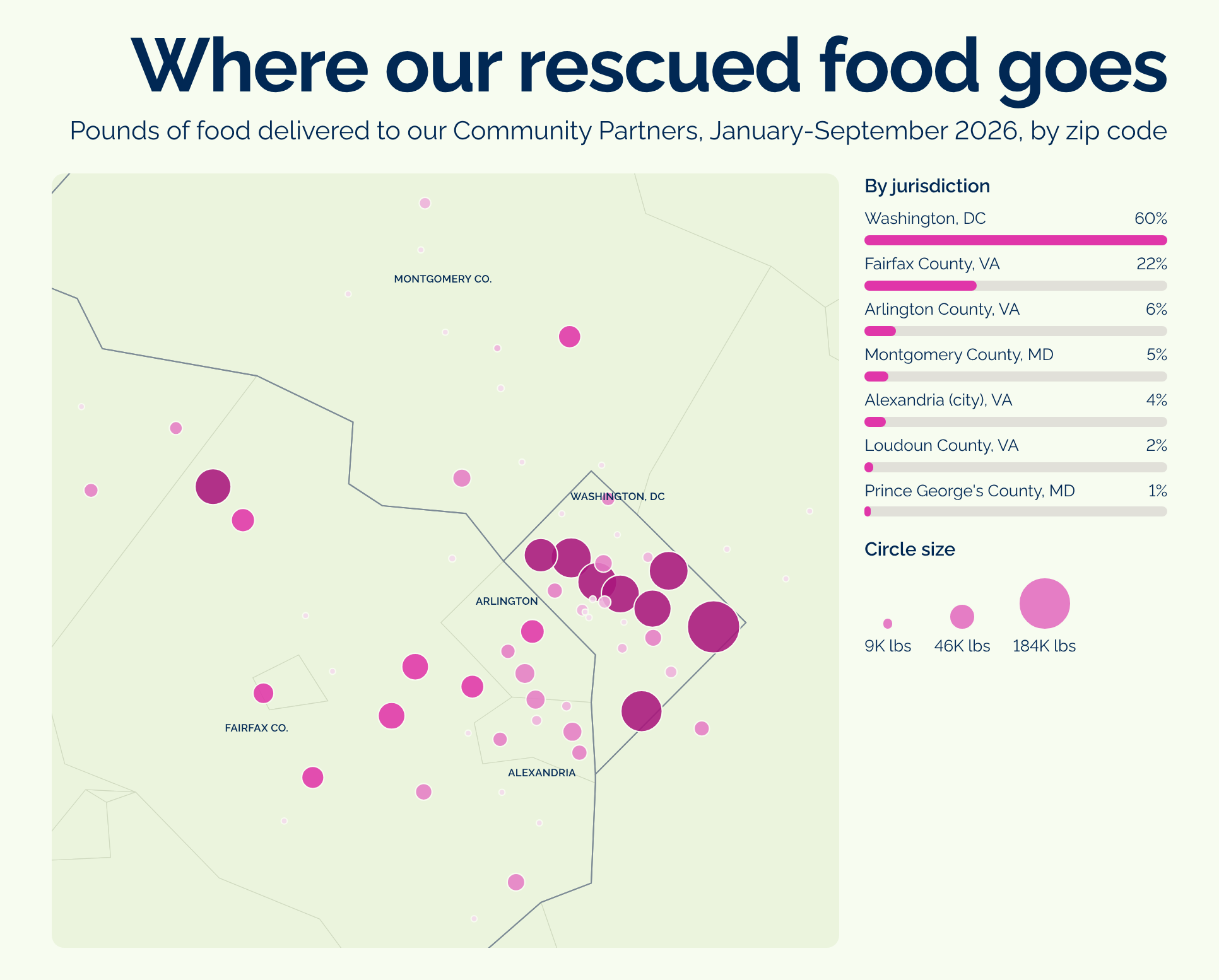
ENUF directs food donations to community-based organizations that support people experiencing food insecurity. With a network of over 300 Community Partners across the DMV, we ensure that surplus food finds the best home for redistribution.
By taking a thoughtful, individualized approach to matching food donations to the needs and capacities of our Community Partners, we ensure that each delivery is both appropriate and genuinely welcomed.
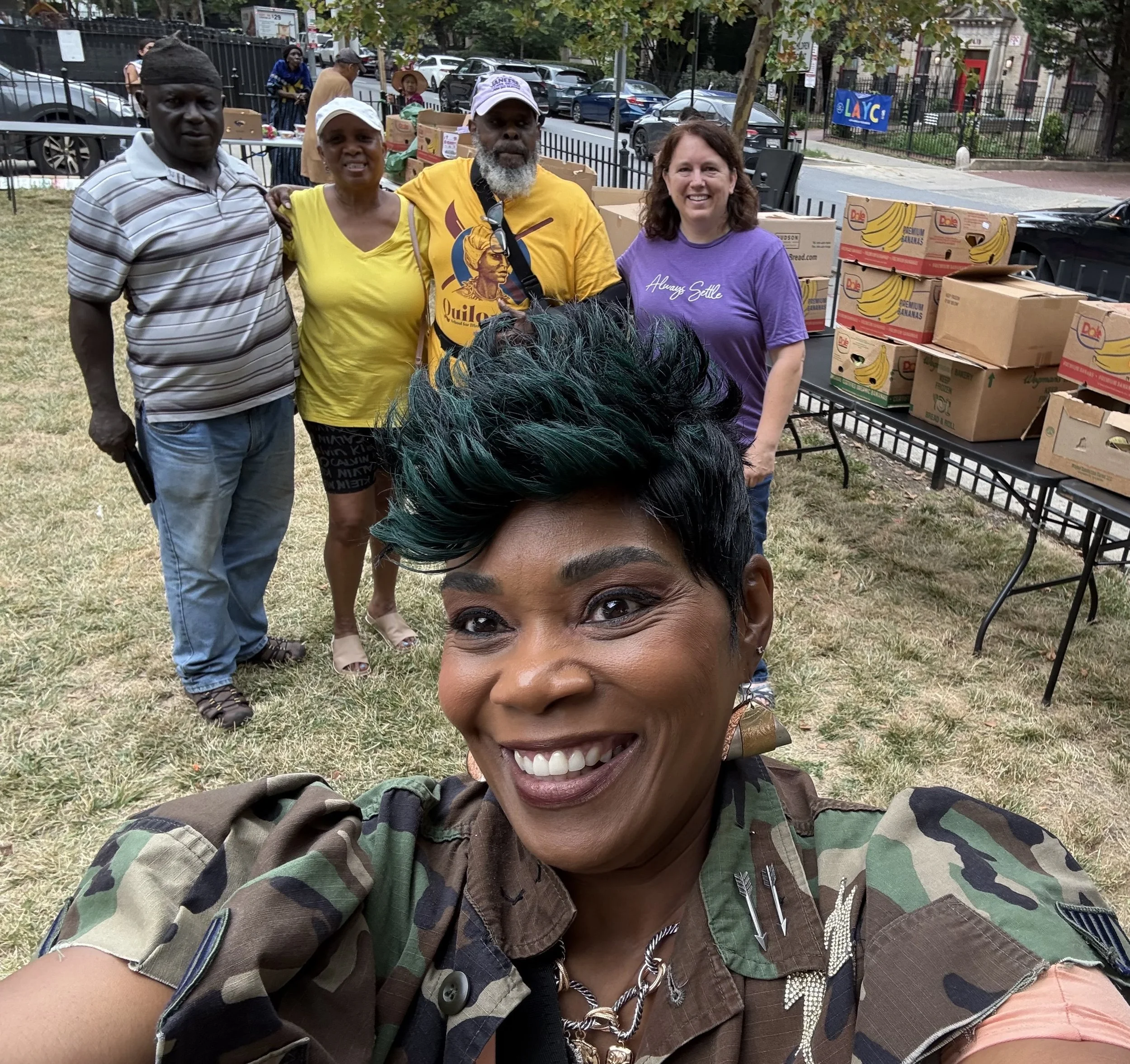
stories behind the numbers:
Columbia Heights Village Tenants Association
Columbia Heights Village is a subsidized apartment community that offers a variety of programs to engage and empower its residents, including a weekly grocery distribution.
Since partnering with DC Food Rescue in 2019, CHVTA has received over 400 rescues, totaling an estimated 165,000 pounds of fruits, vegetables, protein, dairy, baked goods, prepared meals, and pantry staples for their tenants and neighbors in Ward 1 of Washington, DC. The majority of these donations have come from a weekly Wegmans food rescue.
“Our partnership with DC Food Rescue is unparalleled! The relationship we have has afforded our organization to serve thousands of meals and place food where there would be empty cold spaces in some of our residents' refrigerators and pantries would be empty.
The volunteers rescue and deliver with a smile and are always willing to help once they arrive. We would not be able to serve in the capacity that we serve if it wasn’t for DC Food Rescue!”
-Cynthia Hall, Chief Operating Officer
saving food, conserving resources
Reducing food waste is an environmental imperative.
Food sent to landfill decomposes slowly, releasing the potent greenhouse gas methane into our atmosphere. By rescuing and redistributing surplus food, we keep organic matter out of landfill and prevent those emissions.
Wasted food also wastes everything it took to grow, process, and transport it: water, fertile land, fuel, energy, money, labor, and more. When good food is thrown away, all of those resources go with it. Redirecting wholesome surplus to people with limited food access lets that food serve its intended purpose—nourishing people—so the resources behind it aren’t needlessly squandered.
Learn more about food waste
Globally: The Global Benefits of Reducing Food Loss and Waste, and How to Do It – World Resources Institute
Domestically: Progress on the Plate: 2026 ReFED U.S. Food Waste Report – ReFED
Locally: Wasted Food & the Environment: The Impact of Wasted Food in Virginia – Virginia Department of Environmental Quality
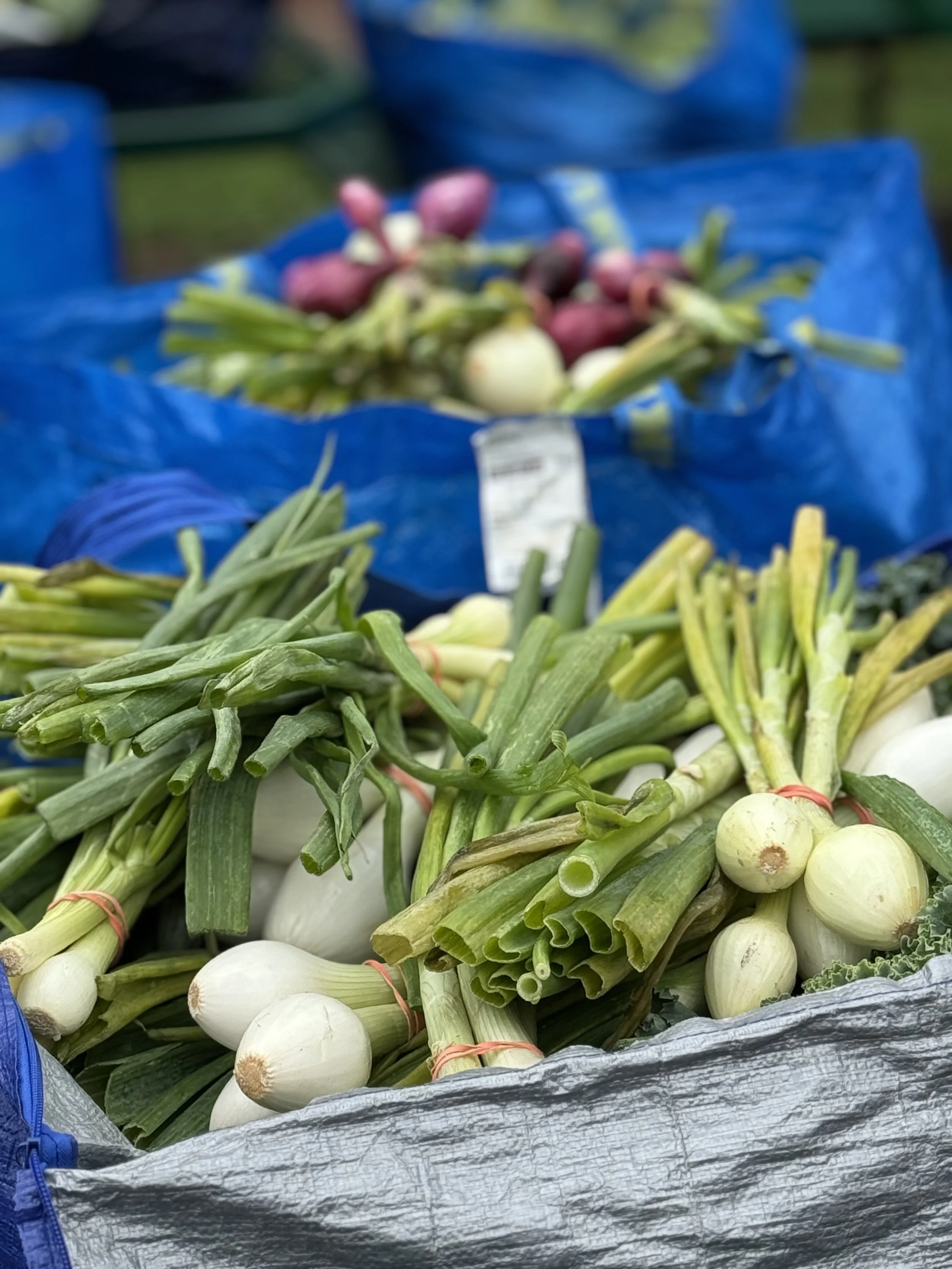
Every rescue we complete has a measurable environmental benefit. The figures below are calculated directly in the Food Rescue US app using the ReFED Impact Calculator, which estimates the greenhouse gas emissions avoided and the water conserved when surplus food is rescued instead of wasted.
798 milliongallons of water
29 millionpounds of CO₂ equivalent
Stay tuned!Our 2026 impact report will be published in December

DC Food Rescue is powered by Food Rescue US